Table of Contents
A lot of dog owners assume dog poop helps the lawn because it is “natural.” That sounds logical at first. Manure is used as fertilizer in some situations, grass needs nutrients, and dogs are part of the family. So it is easy to think a few piles in the yard are no big deal.
But dog waste is different. It is not balanced compost. It is not spread evenly. It is not processed into a safe lawn product. When it sits in one place, it can overload the grass underneath, create odor, attract pests, and leave behind bacteria you do not want near bare feet, kids, pets, patios, or outdoor furniture.
At Fresh Yard Co., we service Lincoln homeowners who love their dogs but do not want their yard slowly turning into the “watch your step” zone. One thing we commonly find is that homeowners underestimate how fast waste builds up, especially in warm Nebraska weather or homes with more than one dog.
Is Dog Poop Fertilizer?
No, dog poop is not good fertilizer for your lawn. While dog waste does contain organic material and nutrients, it is not the same as properly composted manure. It is too concentrated, too inconsistent, and too likely to carry bacteria or parasites.
The biggest issue is concentration. Your lawn needs nutrients spread evenly and safely. Dog poop lands in one pile. That pile sits directly on top of the grass and soil. Instead of feeding the lawn, it can overload that small area.
This is why dog poop often leaves yellow, brown, or dead patches instead of making the grass greener. Think of it like dumping a whole bottle of lawn treatment in one tiny spot. The problem is not that nutrients exist. The problem is that they are too strong, too localized, and not applied correctly.
Why Dog Poop Damages Grass
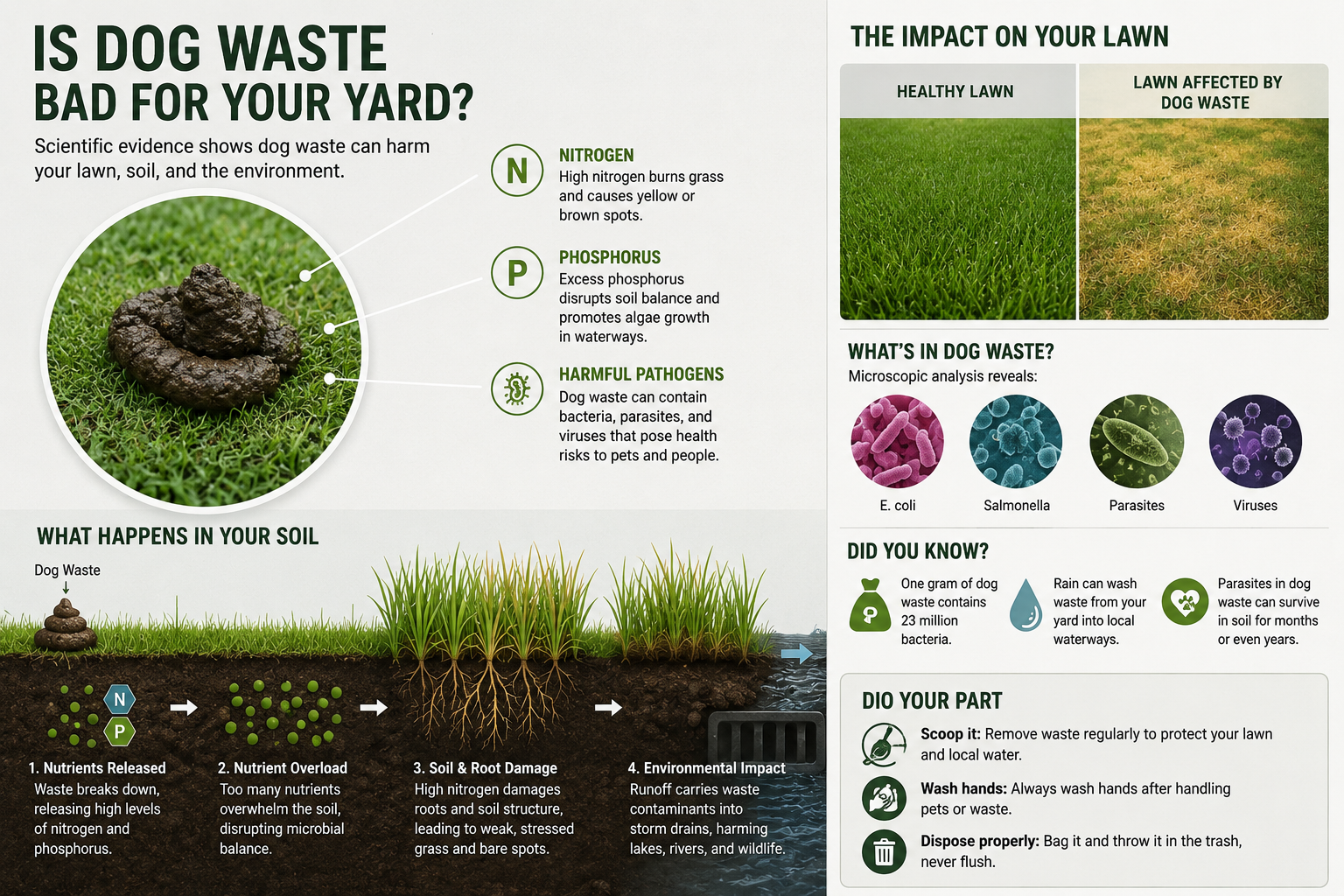
Dog poop can damage grass because it contains concentrated nitrogen, organic acids, moisture, bacteria, and waste residue that sits directly on the lawn. Over time, that buildup can stress the grass underneath and create visible lawn burn.
Dogs eat a protein-heavy diet. That diet affects their waste. Unlike cow manure from herbivores, dog waste is not ideal for lawns. It is more acidic, more concentrated, and more likely to contain pathogens. That is why the “natural fertilizer” idea does not hold up.
| Issue | What It Does to the Yard | Why It Matters |
|---|---|---|
| Concentrated nitrogen | Can burn grass and create yellow or brown spots. | The lawn gets overloaded in one small area. |
| Bacteria and parasites | Can remain in the yard and spread through contact. | Kids, pets, shoes, and paws can track residue around. |
| Odor buildup | Creates stronger smells during heat, rain, and humidity. | The backyard becomes harder to enjoy. |
| Pest attraction | Can attract flies, beetles, and sometimes rodents. | Waste makes the yard more inviting to unwanted pests. |
| Rain runoff | Can spread waste residue across the lawn or toward drains. | Rain breaks it apart, but does not make it disappear. |
Common Signs Dog Poop Is Hurting Your Lawn
The most common signs are yellow patches, brown dead spots, thinner grass, stronger odor, and uneven growth in areas where your dog usually goes. If those spots keep showing up in the same part of the yard, dog waste buildup may be part of the problem.
Nitrogen Burn
Too much nitrogen in one spot can burn your grass instead of helping it grow.
Patchy Yard Spots
Waste that sits in the same area can leave uneven yellow, brown, or dead patches across the lawn.
Odor That Builds Up
Heat, rain, and time make dog waste smell stronger. Your yard basically starts sending smoke signals, just smellier.
Bacteria and Parasites
Dog waste can carry bacteria and parasites that do not belong in a family backyard.
Our experience servicing Lincoln homeowners is that the problem gets worse when the yard is smaller, the dog is larger, or there are multiple dogs using the same space every day. A big backyard may hide the problem longer. A smaller fenced yard usually reveals it faster.
Dog Poop Myths Homeowners Should Stop Believing
Dog poop myths are common because waste seems like one of those “outside problems” nature should handle. Unfortunately, most of these myths make the issue worse by convincing homeowners to leave waste sitting too long.
| Myth | Reality |
|---|---|
| Dog poop fertilizes the lawn. | It can burn grass and spread bacteria. It is not safe, balanced fertilizer. |
| Rain washes it away. | Rain can spread residue across the yard and toward storm drains. |
| It breaks down fast. | Dog waste can sit for a long time, especially when piles keep stacking up. |
| One dog does not make much mess. | One dog going daily can create dozens of piles in just a few weeks. |
| Only the smell matters. | Odor is one issue, but bacteria, parasites, pests, and lawn damage matter too. |
Health Risks of Dog Waste in the Yard
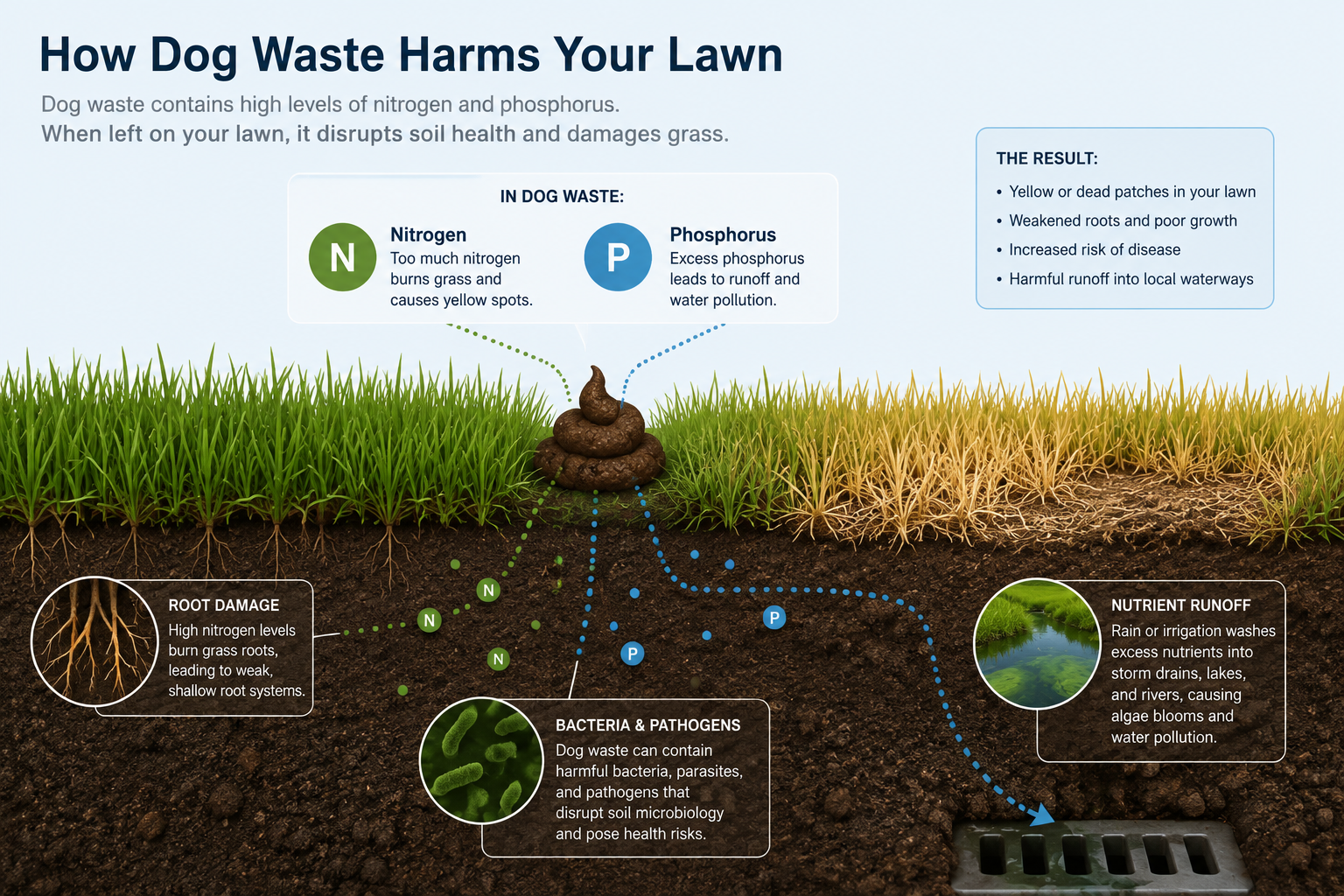
Dog poop is not just a lawn issue. It can carry bacteria and parasites that may be harmful to people and pets. That matters when kids play outside, dogs run through the grass, or anyone tracks waste residue toward the patio, garage, or house.
Dog waste may contain organisms such as E. coli, salmonella, roundworms, hookworms, giardia, or other pathogens depending on the dog, environment, and exposure. The CDC and other public health resources consistently recommend proper handling and cleanup of animal waste because contact with feces can create health risks.
That does not mean every yard is dangerous. It means dog waste should not be treated casually. A backyard is where dogs play, kids run, families grill, and guests walk. The cleaner that space is, the easier it is to actually enjoy it.
At Fresh Yard Co., we also take sanitation seriously because what touches one yard should not be dragged into another. That is why a professional dog waste removal service should care about clean tools, clean footwear, and a consistent process.
Can Dog Poop Make Dogs Sick?
Yes, dog poop can make dogs sick if they come into contact with contaminated waste, step in it, sniff it, eat it, or track residue around the yard. Puppies, older dogs, and dogs with weaker immune systems can be more vulnerable.
Many homeowners think the main problem is stepping in waste. That is definitely annoying, but it is not the only concern. Dogs explore the world with their noses, paws, and mouths. If waste is sitting in the yard, dogs can repeatedly expose themselves to bacteria or parasites.
Regular cleanup helps reduce that exposure. It does not replace veterinary care, vaccines, or parasite prevention, but it is a simple backyard habit that supports a cleaner environment for your dog.
Why Dog Waste Matters More When Kids Use the Yard
If children play in the backyard, dog waste should be removed consistently. Kids are more likely to run barefoot, fall in the grass, touch the ground, and bring their hands near their face. That makes a clean yard more important.
Even if the piles are in the “dog area,” residue can still spread by shoes, paws, lawn equipment, rain, or foot traffic. That is why weekly removal is such a practical baseline for family homes in Lincoln.
Does Rain Wash Dog Poop Away?
No, rain does not solve the problem. Rain may break dog poop apart, but that can actually spread waste residue across the lawn. Instead of one pile in one spot, you can end up with bacteria, odor, and organic matter moving through the grass.
In Lincoln, spring storms and humid summer days can make this worse. Rain softens waste. Heat intensifies smell. Humidity keeps the odor hanging around. If the waste was already building up, a storm can make the yard smell worse instead of better.
Rain can also move waste toward sidewalks, alleys, driveways, drainage areas, and storm drains. That is one reason environmental groups and agencies recommend picking up pet waste rather than letting weather “handle it.”
Environmental Impact: Dog Waste Can Pollute Water
Dog poop is also an environmental issue. When waste is left outside, rainwater can carry bacteria and nutrients into storm drains, ditches, creeks, ponds, and local waterways. In many neighborhoods, storm drains do not treat water the same way indoor plumbing does.
The EPA has long treated pet waste as a source of water pollution when it is not properly removed. That matters in cities like Lincoln because neighborhoods, parks, sidewalks, and yards all connect through drainage systems during heavy rainfall.
The homeowner version is simple: picking up dog waste helps protect your yard and keeps waste from becoming someone else’s runoff problem.
Does Dog Poop Attract Bugs, Flies, or Rodents?
Yes, dog poop can attract flies, beetles, and other pests. In some situations, waste buildup may also contribute to rodent activity because it adds odor and organic material to the yard.
Flies are the most obvious problem. They are attracted to waste, they land on it, and then they land on other surfaces. That is not exactly the backyard experience most homeowners are going for.
If you want a deeper dive on this topic, read our guide on whether dog poop attracts rats. The short version is this: keeping the yard clean gives pests fewer reasons to hang around.
Why Dog Poop Smells So Bad
Dog poop smells bad because it contains organic matter, bacteria, moisture, and gases that become more noticeable as waste breaks down. Heat, rain, and humidity can make the smell stronger.
In Nebraska summers, odor can build quickly. A few piles may not seem like much at first. Then the temperature rises, the yard gets wet, and suddenly the patio does not feel as relaxing.
For odor-specific help, see our guide on how to get rid of dog poop smell in your yard.
The Simple Solution: Do Not Let Dog Poop Sit
The best way to protect your lawn is to remove dog waste consistently. For most homes, once per week is a strong starting point. Larger dogs, multiple dogs, smaller yards, and heavy backyard use may require more frequent cleanup.
The goal is not to wait until the yard is overwhelming. The goal is to prevent buildup before it becomes a lawn damage, odor, pest, or health concern.
How Often Should Dog Poop Be Picked Up?
For most Lincoln homes: weekly cleanup is the best rhythm.
- One small dog: weekly cleanup is usually enough.
- One large dog: weekly cleanup is strongly recommended.
- Two or more dogs: weekly or more frequent cleanup may be needed.
- Small fenced yards: cleanup matters more because waste is concentrated.
- Kids using the yard: do not let waste sit for long.
Fresh Yard Co. helps Lincoln homeowners keep their yards clean without adding another chore to the weekend. Our weekly dog waste removal in Lincoln, NE starts at just $15/week, with no contracts and no hassle.
Can Grass Recover After Dog Poop Damage?
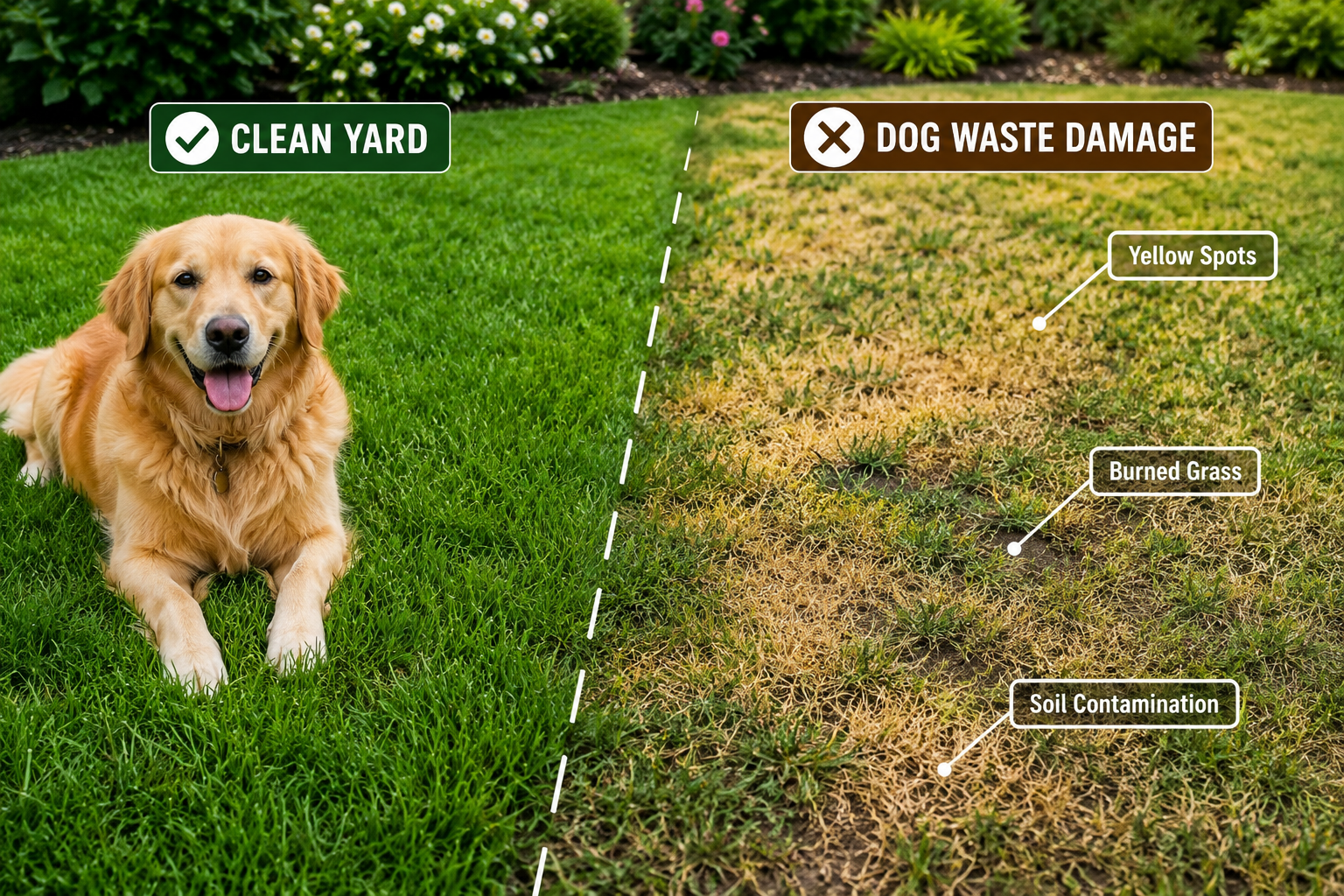
Sometimes, yes. Light yellowing may recover once the waste is removed and the grass gets water, sunlight, and time. But dead patches may need raking, soil improvement, reseeding, or lawn repair.
If the same area keeps getting hit, the grass may struggle to recover because the stress keeps repeating. That is why prevention matters more than repair. Removing waste consistently protects the lawn before damage gets worse.
Why This Matters for Lincoln, Nebraska Lawns
Lincoln lawns deal with a little bit of everything: hot summers, spring rain, snow melt, dry stretches, humidity, and heavy backyard use during nice weather. Dog waste sitting through those conditions can create lawn stress and odor faster than homeowners expect.
In neighborhoods like South Lincoln, East Lincoln, West Lincoln, North Lincoln, College View, Capital Beach, Belmont, Fallbrook, Indian Hills, and Wilderness Ridge, the yards may look different, but the issue is the same: dog waste should not sit for weeks.
At Fresh Yard Co., we have seen that the cleanest yards are usually not the ones where homeowners do one huge cleanup every few months. They are the yards with a simple routine.
How Fresh Yard Co. Helps Keep Lincoln Yards Cleaner
Fresh Yard Co. is a local Lincoln dog waste removal company built around one simple idea: Love your dog. Love your yard. You should not have to choose between having dogs and having a backyard you actually enjoy.
Our service is designed for busy homeowners, families, older homeowners, and dog owners who are tired of the mess but still want a clean outdoor space.
Weekly Dog Waste Removal
We keep your yard on a regular cleanup schedule so waste does not pile up.
Cleaner, Fresher Backyard Feel
Regular cleanup helps reduce odor, lawn mess, and those lovely “watch your step” moments.
Built Around Trust
We take backyard access, sanitation, and reliability seriously because your yard is part of your home.
Want to understand why our service is built differently? Read why Fresh Yard Co. is not the cheapest dog waste removal service in Lincoln.
Final Answer: Dog Poop Is Bad for Your Lawn
Dog poop is bad for your lawn because it is not safe fertilizer. It can burn grass, create yellow or brown spots, spread bacteria, attract pests, smell worse after rain, and make your backyard less enjoyable.
The good news is that the solution is simple. Do not let it sit. A consistent weekly cleanup routine can protect your lawn, reduce odor, and make the yard feel like part of your home again.
Fresh Yard Co. helps Lincoln homeowners keep cleaner, fresher yards without the weekend chore. If your yard has become the forbidden zone, we can help bring it back. No judgment. We have seen things.